




April 8, 2025
Syria: Landmines, Explosive Remnants Harming Civilians
Government, Donors Should Urgently Support Clearance, Education, Assistance

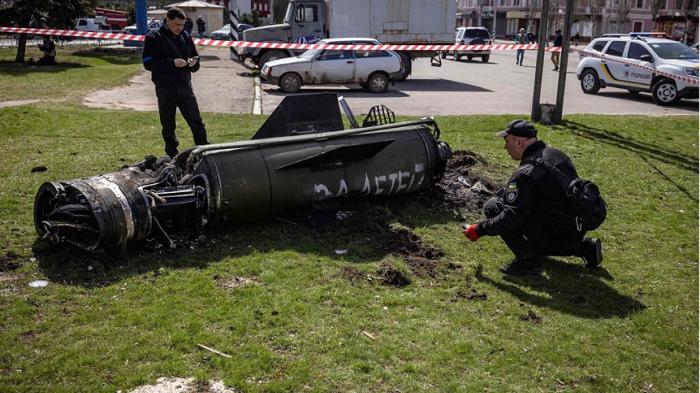
Cluster munitions present an immediate threat to civilians during conflict by randomly scattering submunitions or bomblets over a wide area. Their remnants continue to pose a long-term danger after conflicts end, including submunitions that fail to explode upon impact and become de facto landmines. The 2008 Convention on Cluster Munitions prohibits the use, production, transfer, and stockpiling of cluster munitions. It also requires destruction of stockpiles, clearance of areas contaminated by remnants, and victim assistance. More than 120 states have joined the Convention on Cluster Munitions and are working to implement its provisions. Human Rights Watch is a founding member of the Cluster Munition Coalition and contributes to its annual Cluster Munition Monitor report.
Government, Donors Should Urgently Support Clearance, Education, Assistance
Syrian, Russia Forces Also Use Incendiary Weapons
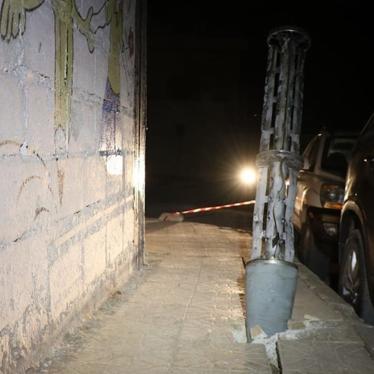
Russian Forces Use Widely Banned Cluster Munitions, Damage Hospitals
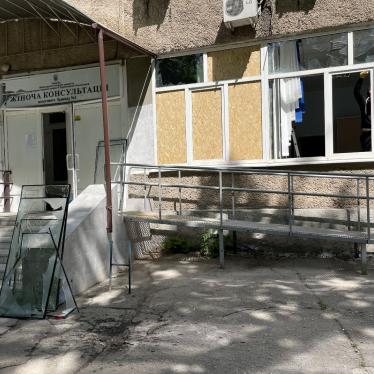
Both Sides Obligated to Minimize Civilian Harm
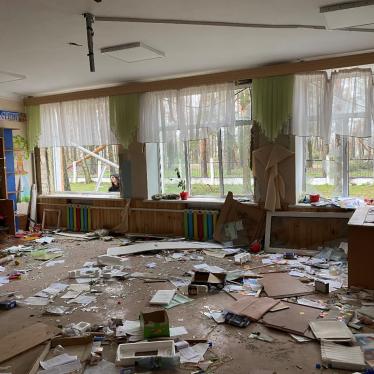
Purchase Signals Embrace of Indiscriminate Weapons, Disregard for Civilians

Deadly Explosion Might Be Traced to Recent Thailand-Cambodia Border Clashes

Annual Global Report Highlights Progress Amid Rising Challenges

UN, Concerned Governments Should Urge Respect for International Law

Delivered by Mark Hiznay, Associate Director
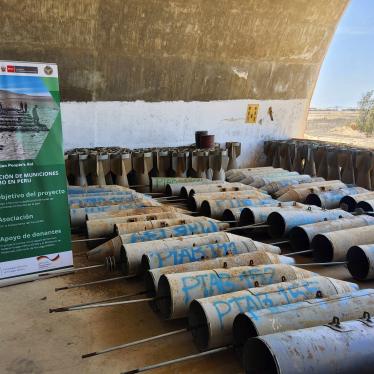
Government, Donors Should Urgently Support Clearance, Education, Assistance
Delivered by Mark Hiznay, Associate Director

Supported International Justice and Child Soldier, Landmine Bans

Delivered by Mary Wareham on behalf of the Cluster Munition Coalition

Global Report Tracks Civilian Harm from Prohibited Weapon
