
HUMAN RIGHTS
WATCH Africa FrenchSpanishRussianKoreanArabicHebrewspacer
RSSPortugueseGermanChinesePersianMore Languagesspacer
   

Take Action

Urge African Governments to Ratify and Enforce Women’s Rights Protocol

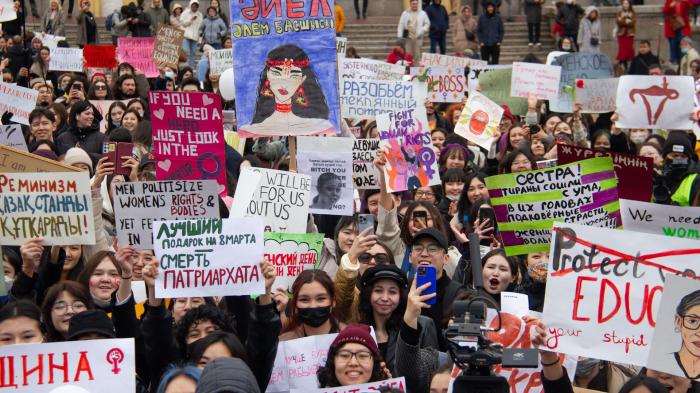
African women made history in 2005, as a protocol came into force that specifically protects women’s human rights and breaks new ground in international law.

The women's rights protocol was adopted in 2003 but needed fifteen countries to ratify it before it became law. The seventeen countries that had ratified the protocol as of January 2006 were Benin, Comoros, Cape-Verde, Djibouti, The Gambia, Libya, Lesotho, Mali, Malawi, Mauritania, Mozambique, Namibia, Nigeria, Rwanda, South Africa, Senegal, and Togo.

You can help promote desperately needed women's rights in Africa by writing to these governments and calling on them to comply with the protocol by amending their domestic laws and practices.

You can also write to African governments who have not yet ratified the protocol, urging them to make a committment to women's rights by doing so. The African Union's Web site provides updated information on ratifications.

Why the protocol is needed: Many women in Africa endure rampant and brutal human rights violations in their homes and in the public sphere, perpetuating their inequality and putting them at risk for poverty and disease, including HIV/AIDS. Governments have done far too little to end abuses such as domestic violence, marital rape, unequal property and inheritance rights, trafficking, labor rights abuses, sexual violence in armed conflict, and discrimination in education and health care systems. In many countries, statutory laws actually support these abuses.

Video: Gladys M'sodzi Nhekairo-Mutukwa, of Women in Law and Development in Africa (WiLDAF), explains the protocol and its importance to women in Africa (requires Quicktime).

What the protocol says: The protocol protects a broad range of women’s human rights, reinforcing international law on women’s equality. In some respects, it provides greater protections than under other international human rights treaties. Among other things, it calls on governments to:

  • Enact protections against and remedies for sexual harassment in the workplace and schools;
  • Promote women’s sexual and reproductive health, including protection against HIV/AIDS;
  • Enact and enforce laws prohibiting violence against women, including forced sex, whether it occurs in public or private;
  • Promote the right to equal remuneration for women and men for work of equal value;
  • Ensure increased participation of women in peace processes and post-conflict reconstruction and rehabilitation, as well as to reduce military spending in favor of social development and the promotion of women;
  • Protect women’s reproductive rights by permitting abortion in cases of rape, incest, and where the continued pregnancy endangers the mother’s mental and physical health or the life of the mother or fetus;
  • Promote women’s access to and control over land and other productive resources and to inherit equitable shares of property from their husbands and parents;
  • Grant women and men rights to equitable sharing of joint property upon separation, divorce, or annulment of marriage;
  • Establish protection and social insurance systems for women working in the informal sector, and recognize the economic value of women’s work in the home; and
  • Ensure that the minimum age of marriage for girls is eighteen.

The protocol is known officially as the “Protocol to the African Charter on Human and Peoples’ Rights on the Rights of Women in Africa”.

Show your solidarity

Write to African governments who have ratified the protocol and urge them to comply with it by amending their domestic law and practice. Click here for a sample letter.

Write to African governments who have not yet ratified the protocol and urge them to do so. Click here for a sample letter and click here for a list of African governments and addresses.


    TK
An adovocate for the rights of women living with HIV hands out posters in Kenya (Photo: Tony Robinson, 2001).

Video:

Zambian Gender and Human Rights Activist Gladys M'sodzi Nhekairo-Mutukwa

Take Action:

Sample Letter to African Heads of State

African Governments and Addresses

Further Reading:

Full Text of the Protocol
More on Women's Rights from Human Rights Watch

Support Human Rights Watch

Your contribution to Human Rights Watch will allow us to continue to investigate human rights abuses in more than 70 countries and provide innovative solutions to end them. Every investigation we undertake, every advocacy campaign we embark on, and every report we produce is paid for solely by generous contributions from individuals and foundations. Please contribute today.

HRW Logo Contribute to Human Rights Watch

Home | About Us | News Releases | Publications | About HRW | Info by Country | Global Issues | Campaigns | What You Can Do | Community | Bookstore | Film Festival | Search | Site Map | Contact Us | Press Contacts | Privacy Policy

© Copyright 2004, Human Rights Watch    350 Fifth Avenue, 34th Floor    New York, NY 10118-3299    USA