

HUMAN RIGHTS
WATCH Women's Human Rights FrenchSpanishRussianKoreanArabicHebrewspacer
RSSPortugueseGermanChinesePersianMore Languagesspacer
   
Latest News Publications
International Legal Standards Links to Related Resources


Women's Rights in Asia    

Women throughout Asia confront systematic discrimination and abuse, often with little hope of any redress.  From deeply entrenched legal and social norms that subordinate women to pervasive and horrific acts of violence, women's rights violations remain one of the most enduring and grave human rights crises in the region.  The risks and types of abuse may intersect with a woman's ethnicity, religion, age, class, sexual orientation, and national origin, but the simple fact that she is a woman often subjects her to an unequal status.  

Governments across the region have mixed records in protecting women's rights-with some governments, such as Pakistan, routinely flouting their obligations; others, such as Indonesia, failing to back up rhetoric with resources and political will; and still others, such as India, condemning women's rights initiatives to flounder against apathy and incompetence. Despite continuing women's rights violations, some governments, such as Nepal, deserve credit for passing important legal reforms and devoting resources to issues like human trafficking.

Recent decades have witnessed a proliferation of women's rights groups and activism in many countries, new legal reforms, and, in some areas, strides in education, labor force participation, and political participation.  Despite these hard-won changes, hundreds of millions of women in Asia still struggle daily against multiple layers of legal, social, economic, and political oppression.  

Among the major human rights violations against women in the region are exploitation and abuse of women workers;  high rates of gender-based violence; discrimination in education, health care, and property rights; and barriers to women's free movement and participation in the public sphere.  A shared thread in many countries across Asia is women's unequal status before the law and the failure of governments to prevent and punish women's rights violations.  Women throughout Asia often confront hostile, unresponsive, or abusive justice systems after they experience human rights abuses rather than support as victims and survivors.

Violations of women's social and economic rights both exemplify and fuel further gender-based discrimination.  Women's social and economic marginalization often prevents them from escaping abuse or obtaining justice.  Unequal property and inheritance rights render women economically dependent on patriarchal systems.  Several countries' civil codes guarantee women's property rights, as in India, but often these are voided by poor enforcement. In many cases they are rendered almost meaningless by the dictates of religion-based personal status laws and customary practices that deny women equal rights to own and inherit property.  

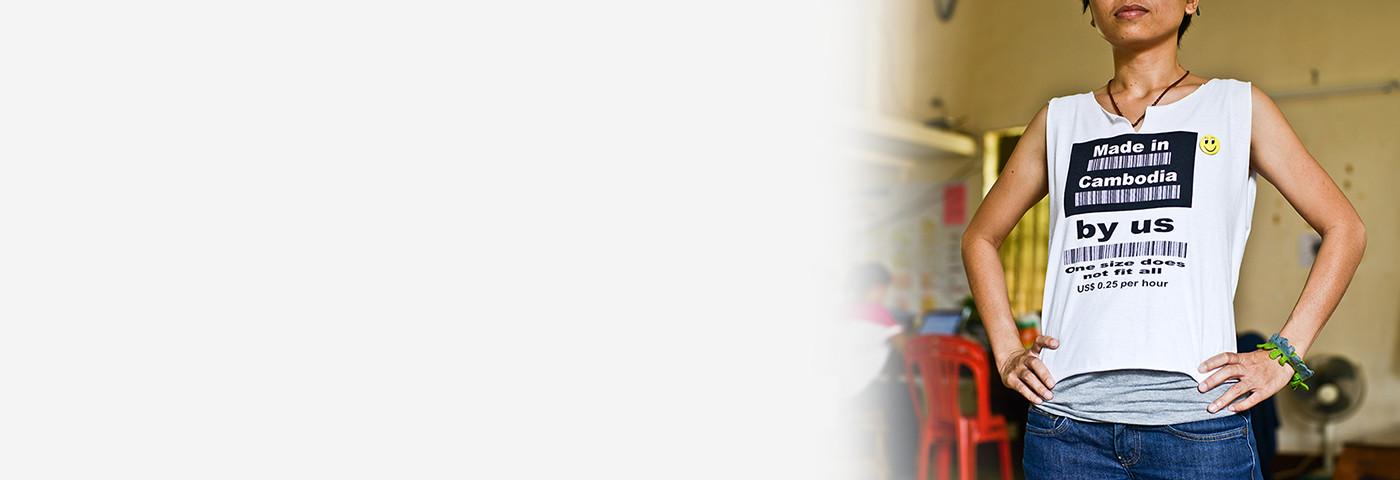
In recent decades, Asian women's labor force participation and earning power has grown.  Yet women workers across industries endure sexual harassment, poor working conditions, pregnancy-based discrimination, and glass ceilings.  Women often receive less pay than men for equal work.  Abuses are especially common in export-processing zones in countries such as Bangladesh, China, and the Philippines, where governments exempt companies from or fail to enforce important labor regulations, and young women comprise the vast majority of workers.

Migrant women workers risk abuse during recruitment, training, transit, employment, and return to their homes.  Millions of Asian women migrate from rural areas to urban areas, or from poorer countries to more prosperous nations to work in restaurants, factories, domestic work, and sex work.  These women send home billions of dollars in remittances each year.  Despite these economic contributions, these industries are poorly regulated; for example, most countries exclude domestic workers from their labor laws.  Abuses are rife against women from Indonesia, the Philippines, and Sri Lanka who migrate as domestic workers to the Middle East, Malaysia, Hong Kong, Singapore, and other countries.  They include routinely working sixteen to eighteen hours a day, seven days a week, with irregular or no payment of their wages.  Other domestic workers suffer forced confinement at the workplace or physical and sexual violence from their employers.  

Human trafficking into forced sex work, forced labor, and forced marriage is a serious problem throughout the region.  This disturbing phenomenon, in which women and girls are forced into situations of exploitation, encompasses egregious violations of women's core human rights, including the right to liberty.  Woefully inadequate monitoring of labor agencies and the use of deception and coercion during recruitment for jobs abroad turns many prospective migrants into victims of trafficking.  Collusion between traffickers, the police, and immigration officials also contributes to the problem.  Despite greater government awareness in some countries, progress in prevention and response to trafficking has been lethargic.

Women refugees and internally displaced persons (IDPs) are especially at risk of discrimination and violence, not only during armed conflict and natural disasters, but also in the relief and recovery phase.  Misogynistic management structures and inadequate supplies of aid in camps may lead to increased risk of trafficking or even sexual exploitation by aid workers.  In the longstanding Bhutanese refugee camps in Nepal, ration-distribution through male heads of household left many women refugees without their fair share of aid.  

In Asia, as throughout the world, gender-based violence is insidious and rampant.  Forms of violence prevalent in the region include sexual violence, domestic violence, marital rape, female infanticide, sexual harassment, trafficking, and forced marriage.  Countries such as Pakistan, Bangladesh, and India are particularly notorious for acid attacks and so-called honor killings, in which family members murder a woman for perceived moral transgressions such as talking to a man in public or marrying without family approval. The rate of violence varies in different countries.  Women's groups have documented a high incidence of sexual violence committed by military and police against ethnic minority women in Burma.  

Most governments have failed to prevent or respond effectively to violence against women.  Survivors of violence often confront formidable challenges in obtaining redress-ranging from gaps in legal protections, onerous procedural requirements, unresponsive police, and lengthy, costly trials.  Shelters, counseling services, and other support mechanisms face funding shortages and varied levels of government cooperation.  Furthermore, women who seek help from the justice system may be doubly victimized.  Women are subject to sexual harassment and abuse by the police.  Under Pakistan's Hudood ordinances, women who report rape may instead be convicted of adultery if they cannot produce four male witnesses to support her claim.  Prosecutions for honor killings are rare given loopholes allowing the victim's family to issue a pardon to the perpetrator, often a member of the same family.  Most countries fail to criminalize marital rape.

Too often, the confluence of paternalistic government policies and social norms exert tight restrictions on women's reproductive choices, sexual autonomy, and mobility.  Women may not have access to contraception or even information about their options.  Their families may overrule their decisions on the number and spacing of their children.  Indonesia, Bangladesh, and Burma prohibit abortion except to save a woman's life, and Laos and the Philippines prohibit abortion completely. These policies prevent women from fully exercising their rights to health and health care; life; nondiscrimination, security of person; privacy; and information.  

In South Asia, young women are under constant surveillance from their families and societies, and their movements circumscribed in efforts to preserve their "sexual purity" and "honor."  Women who are perceived to have infringed these norms may confront abuse from their families, ostracism, and in some cases, criminal prosecution under adultery laws.  Early and forced marriage are a fact of life in Nepal, Bangladesh, India, Pakistan, and Afghanistan.  In these countries, more than 50 percent of girls marry before age eighteen or without giving their consent.  Transgressions of these norms can result in vicious attacks, such as disfiguring acid attacks, intended to destroy the woman's life and send warnings to others.  Pakistan and Bangladesh witness hundreds of honor killings and attacks each year.

Restrictive family planning policies and social customs such as giving large dowries have further devalued women and girls.  In South Asia, China, and South Korea, preferences for boys have led to disturbing patterns of sex-selective abortions, female infanticide, and disparate treatment for girls in terms of health care, nutrition, and schooling.  

Women and girls' education varies strikingly across the region.  In East Asia and most of Southeast Asia, women's literacy and girls' secondary school enrollment rates are typically equal or even surpass those of males.  However, in South Asia, female literacy rates remain staggeringly low.  In Pakistan, there are only sixty-four literate women for every one hundred literate men.  Eighty-six percent of Afghan women are illiterate, compared to 57 percent of Afghan men.  Change is slow even for younger generations:  in some provinces of Afghanistan, less than 10 percent of girls aged 7-12 attend school, compared to 37-63 percent of boys aged 7-12.  

The impact of discrimination plays out with devastating consequences on women's health.  Rural, indigenous, and poor urban women often have fragmented or no access to basic health services.  Along with women in sub-Saharan Africa, women in South Asia have the highest maternal mortality rates in the world.  For every 100,000 live births in India and Nepal respectively, 540 and 740 mothers die-a sharp contrast to Japan, where the number is ten.  In Afghanistan, this figure rises to 1,900 maternal deaths.  Asian governments often fail to ensure that reproductive and sexual health care is safe and accessible.  Alarmingly, in countries like Cambodia, Burma, Thailand, and India, the rise in women's rates of HIV is largely due to their partners contracting the virus from sex workers or intravenous drug use.  Domestic violence, sexual violence, and child marriage leaves many women and girls unable to negotiate condom use or protect themselves in sexual relations with their husbands or long-term partners.

Increasing women's political power is imperative for raising women's status, preventing human rights violations against women, and more effectively responding when they occur.  Some governments, such as Afghanistan and Pakistan, have established quotas for women's political representation.  However, discrimination and violence against women also disrupt women's political participation.  Women remain poorly represented in local and national governments.  Across the region, women seeking to participate in public life as activists, journalists, and government officials face barriers including restrictions on their mobility, stereotypes, harassment and even attacks.  In Afghanistan, women who run female literacy projects, raise awareness about sexual and domestic violence, or work in the government have received death threats, visits from gunmen, and attacks on their homes and offices.

Although many governments in the region have ratified the Convention on the Elimination of all Forms of Discrimination against Women (CEDAW), and a few its optional protocol, their implementation rarely meets national and international legal obligations.  Protection of women's rights has been uneven and inadequate.  Many countries have vibrant women's movements that have slowly been able to push through reforms or establish support services.  From grassroots rural women's movements and microcredit initiatives to professional women lawyers' and judges' associations, women in Asia are creating and agitating for change.  Governments should answer these demands with commitments to enact meaningful and immediate reforms in defense of women's rights.


Women's Rights Division Home Page
Regional Overview
Asia
Latin America and the Caribbean
Middle East and North Africa
Thematic Issues
Women Workers
Domestic Violence
Reproductive Choices and Sexual Autonomy
Sexual Violence
Women and HIV/AIDS
Women and Armed Conflict; International Justice
Trafficking
Refugee and Internally Displaced Women; Gender-Based Asylum Claims
Women's Status in the Family and Legal Status
Women in State Custody
Campaigns and Focus Pages 
About the Women's Rights Division
Frequently Asked Questions
Staff Interviews
Advisory Committee
Staff Information
Employment Opportunities


Receive News on Women's Rights by Email


Privacy Policy

Overview of Women's Human Rights Developments
2001
2000
1999
1998
1997


HRW Logo Contribute to Human Rights Watch

Home | About Us | News Releases | Publications | About HRW | Info by Country | Global Issues | Campaigns | Free Mailing Lists | Community | Bookstore | Film Festival | Search | Site Map | Contact Us | Press Contacts | Privacy Policy

© Copyright 2006, Human Rights Watch    350 Fifth Avenue, 34th Floor    New York, NY 10118-3299    USA